
Breaking New Ground
Since the 1970s, Congress had considered plans for a visitor center.
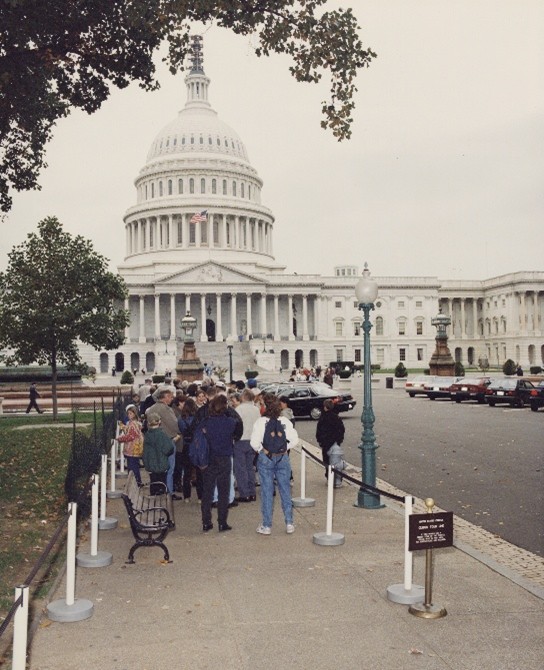
A historic, working office building, the Capitol at the time offered few amenities or educational programs. People coming to the Capitol waited outside, often in long lines with no protection from the weather.
A visitor center would provide essential services, such as a dining facility, water fountains and restrooms, along with space for exhibits and educational programming.
But a visitor center remained an idea, not a physical space.
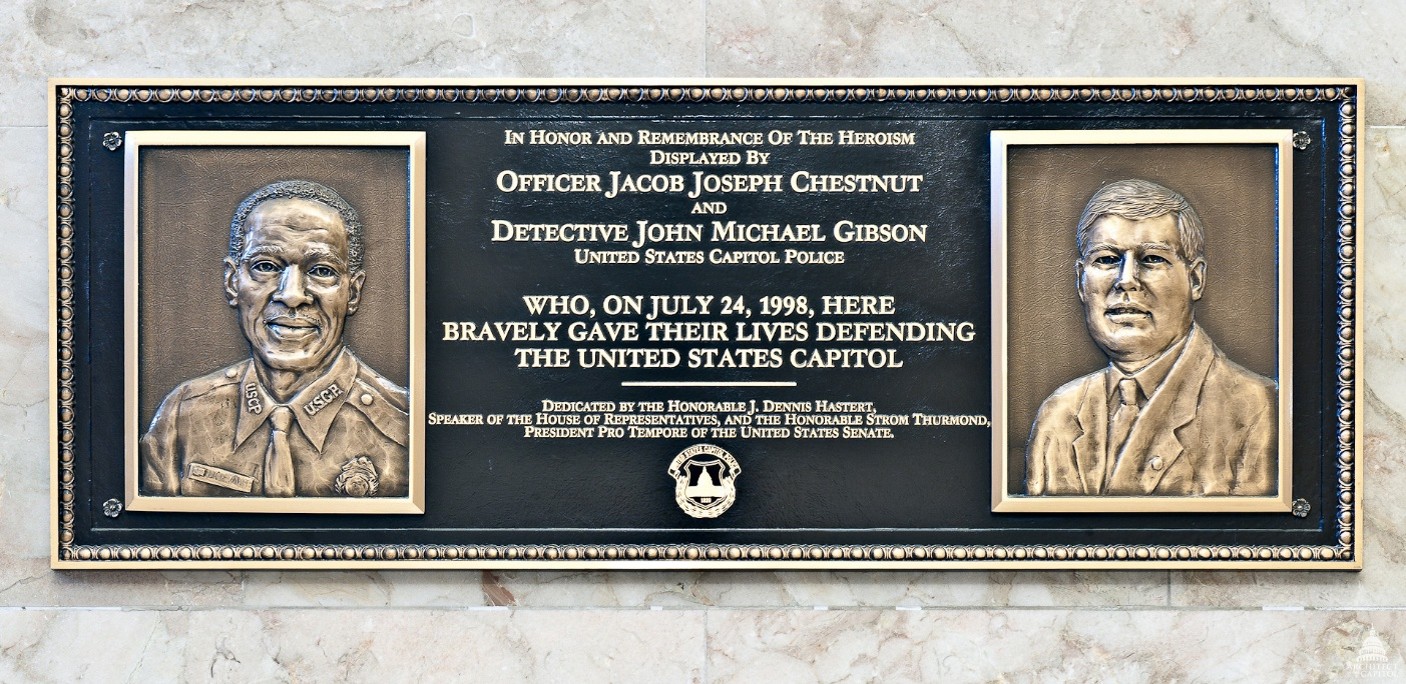
On the afternoon of July 24, 1998, Visitor Guide Adriane exchanged greetings with longtime colleague U.S. Capitol Police Officer Jacob J. Chestnut. As her 3 p.m. tour ended, chaos ensued. An armed assailant entered the Capitol and shot and killed Officer Chestnut and Detective John M. Gibson, before being apprehended by other officers.
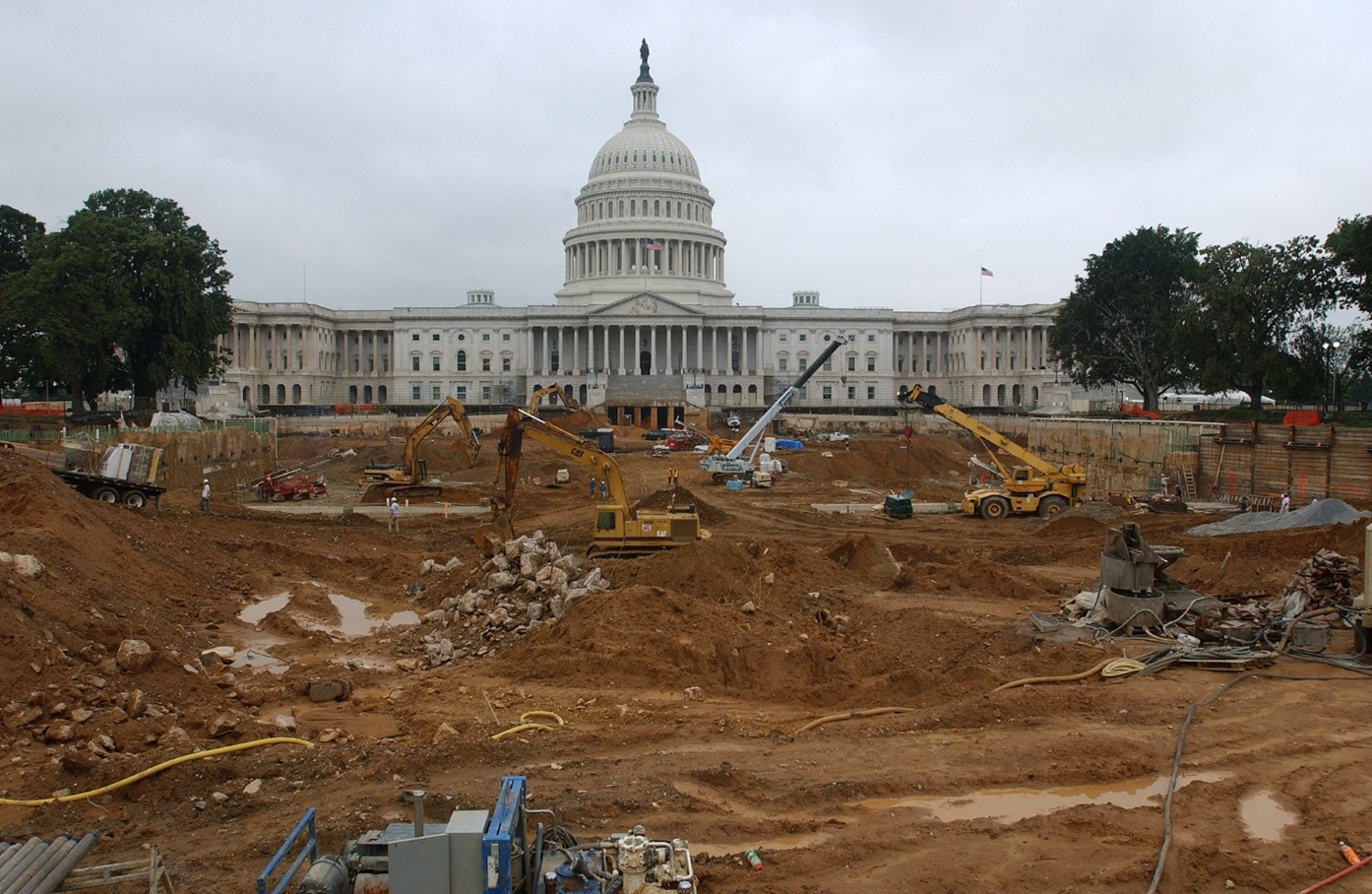
In the wake of this tragedy, Congress considered a new, long-discussed plan for a visitor center. On June 20, 2000, Congress broke ground for construction of the Capitol Visitor Center.
A New Sense of Urgency
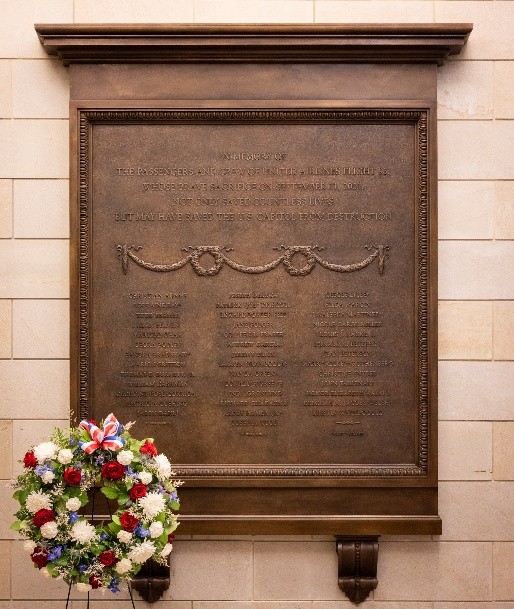
A little more than a year later, passenger airplanes hit the North and South Towers of the World Trade Center and the Pentagon.
United Airlines Flight 93, hijacked and headed towards the Capitol, crashed in Pennsylvania when the passengers fought back.
As Visitor Guide Nellie Neumann evacuated that day, she looked back at the Dome not knowing if she would ever see it again, let alone give tours inside. (Tours resumed 85 days later.)
The September 11 attacks provided even more urgency to build and open a visitor center.
Constructing the Capitol Visitor Center was a monumental task. Workers removed 65,000 truckloads of material from the East Front of the Capitol and set more than 400,000 pieces of stone to construct the interior. Many trees, including the Liberty Tree, were replanted to make way for the underground facility.
Solemn and Dignified
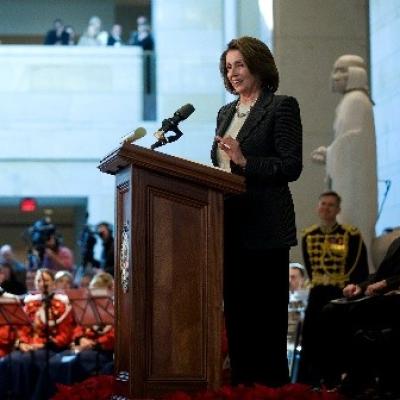
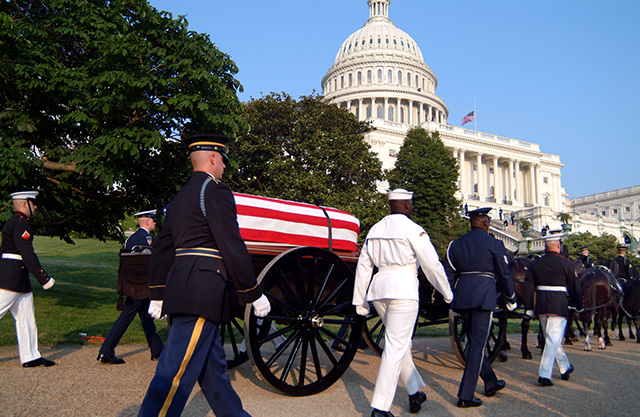
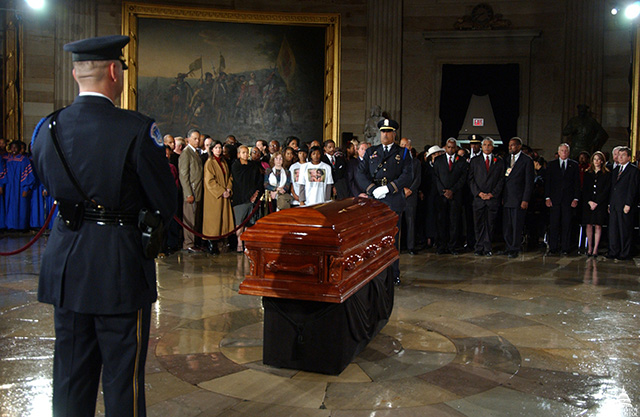
Congress created a new tradition to honor Officer Chestnut and Detective Gibson — the Lying in Honor ceremony. Similar to a Lying in State ceremony to honor presidents, military leaders or Members of Congress, a Lying in Honor ceremony pays tribute to those who did not serve in public office.
During the construction of the Capitol Visitor Center in 2004, Congress held a Lying in State ceremony for President Ronald Reagan, and in 2005, a Lying in Honor ceremony for civil rights pioneer Rosa Parks.
Guides played an essential role in the ceremonies for both Parks and Reagan as thousands paid their respects. Visitor Guide Marian Wagener recalled leadership saying, “This is the most important thing we do here in the Capitol. It is bigger than the Inauguration Day. It’s bigger than anything else that goes on in the Capitol.” The Capitol Visitor Center continues to serve the Capitol and Congress at these solemn events upon request.
| 
|
Capitol Guide Spotlight
Ted Daniel has worn many hats around the U.S. Capitol — House Page, Visitor Guide, Director, Assistant Sergeant at Arms, and Senior Advisor. His guide career began in 1981. Like Maryellen and Adriane, he followed in the footsteps of his father, who worked for a Member of Congress. “I was always looking for something extra to do,” said Ted. He was selected as Chief Guide in 1995 and remained in the role until 2000 when he became the Director of Visitor Services. Ted left the Guide Service for the office of the House Sergeant at Arms where he serves today.