
Guides and New Technology
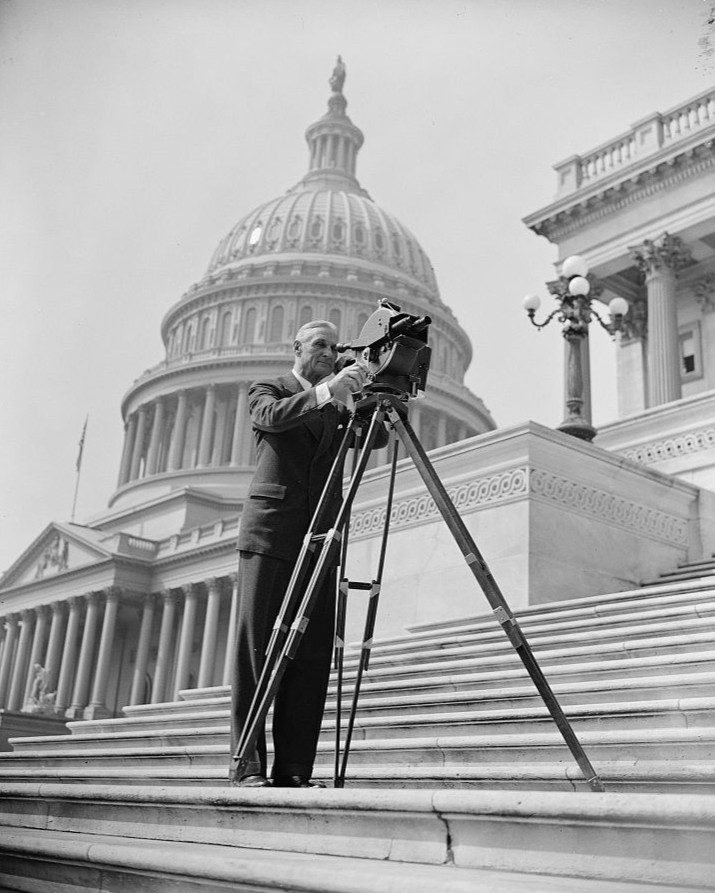
America celebrated its 150th birthday in 1926, in the middle of the “Roaring Twenties” when the nation saw unprecedented changes. New technologies like film and radio were entering the mainstream, helping to bring the nation closer to Congress and the Capitol. With these advancements, the Capitol Guide Force modernized as well. The Guide Force grew to almost 30 Guides in a few decades.
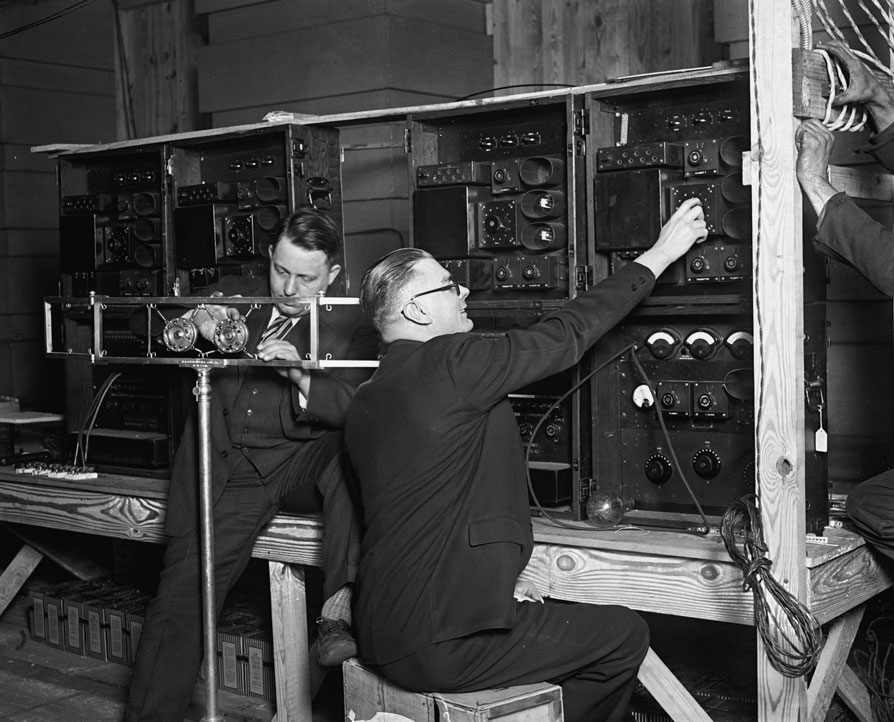
Radio technology rapidly spread across the nation. Presidents Warren Harding and Calvin Coolidge were the first presidents to use the radio for their Annual Addresses to Congress in the 1920s.
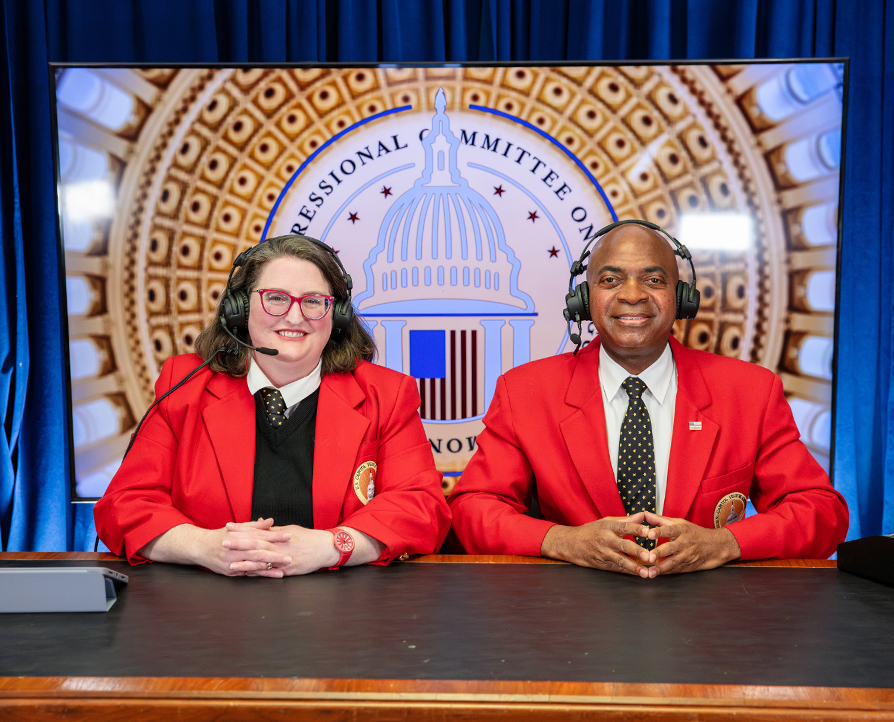
When Herbert Hoover was inaugurated at the Capitol in 1929, NBC Radio broadcast the entire proceedings for the country to hear. Once the inaugural parade was underway, listeners were taken on a brief Capitol “tour” by Guide George W. Popkins. This tradition of Guides narrating the presidential inaugural ceremonies returned in 2021.
Guides On Tour
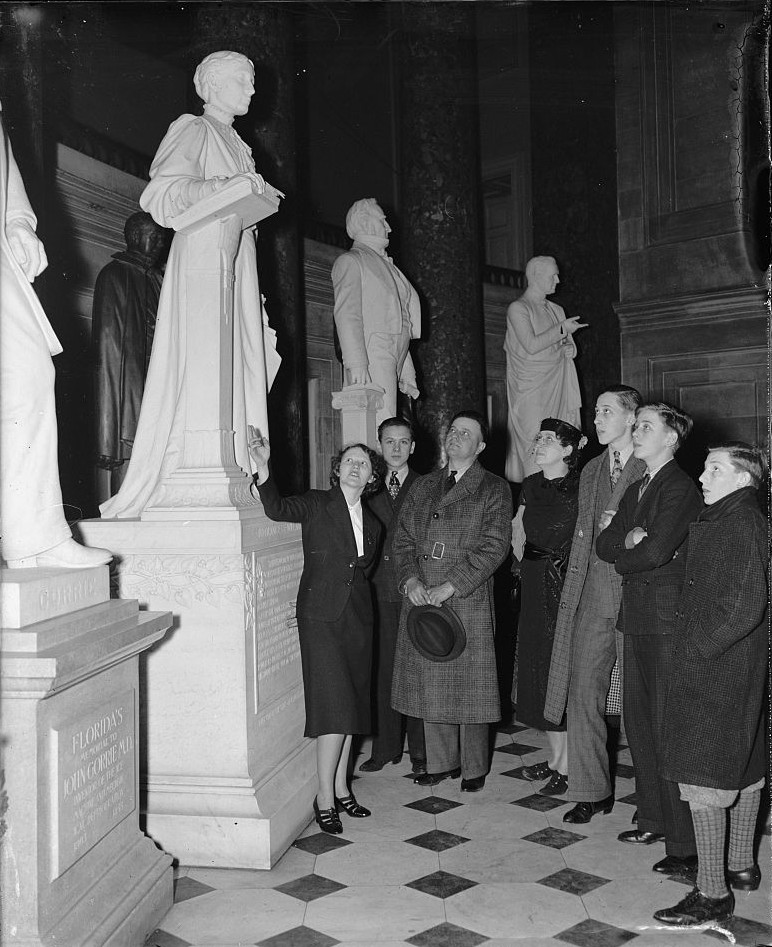
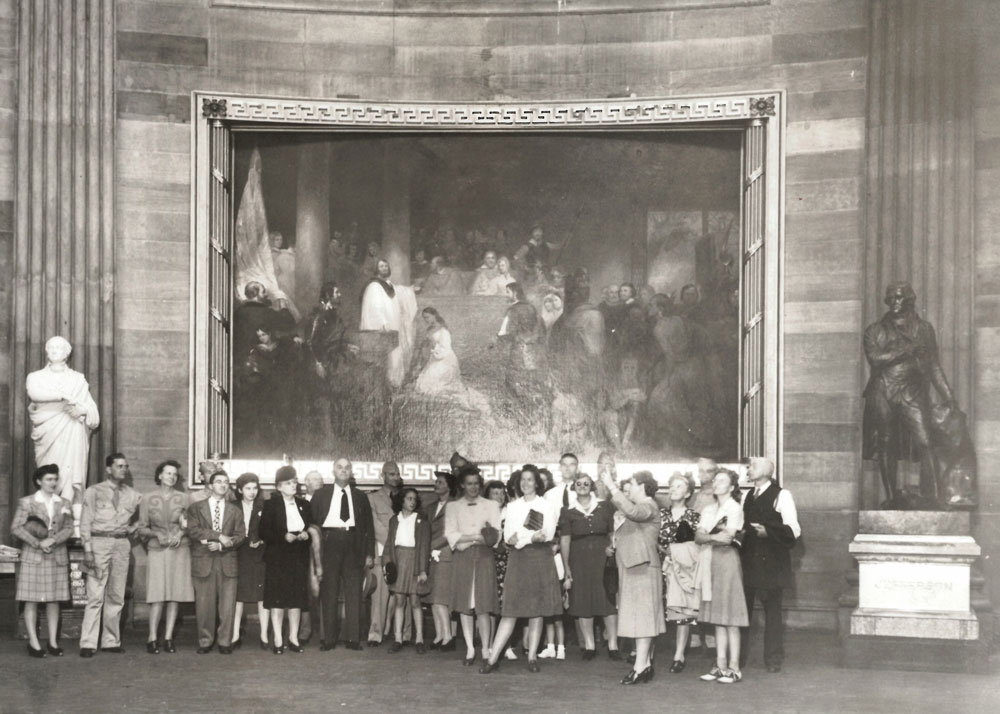
In the 1930s, Congress established new standards for Capitol Guides.
Those standards for providing tours of the Capitol endure today. Guides are directed to focus their talks on “the purely historical features of the building,” as Chief Guide Benjamin Cady noted at the time.
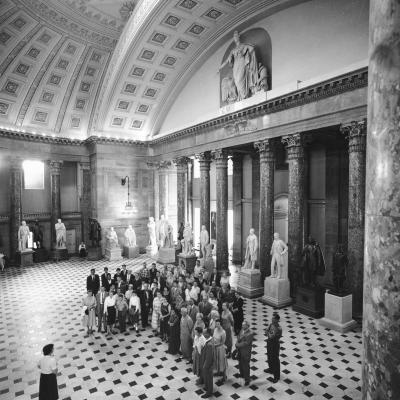
The Guide Force grew to 24 people with the House and the Senate each appointing 12 Guides.
Guide Force uniforms were introduced in the 1930s modeled after those worn by airline crews — lighter grey fabric in the summer and navy wool in the winter.
The workload was divided based on alphabetical order. When the last Guide on the rolls gave a tour, the first Guide on the rolls was up next. This tradition continued until the opening of the Capitol Visitor Center in 2008.
Congressional Connections
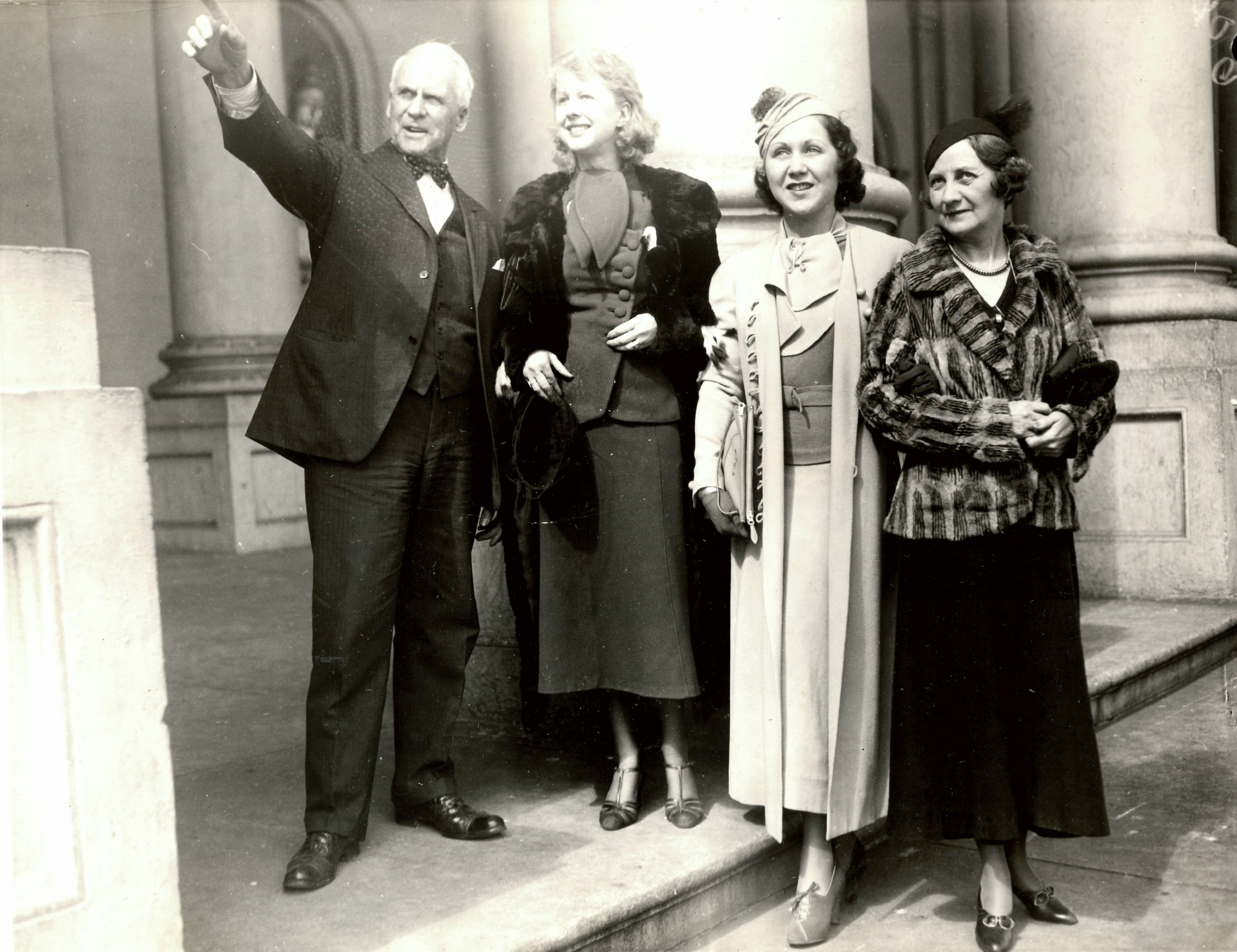
One Guide may have had an unfair advantage in knowing how Congress works. Charles R. Evans of Nevada served one term in the House of Representatives in the 66th Congress (1919-1921). In 1934 he began a 15-year career as a Guide. Newspapers noted he did not disclose his previous position to his tour groups.
Capitol Guide Spotlight
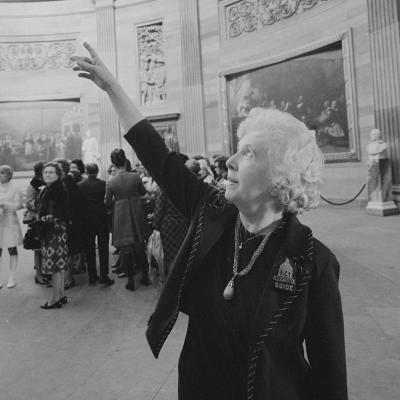
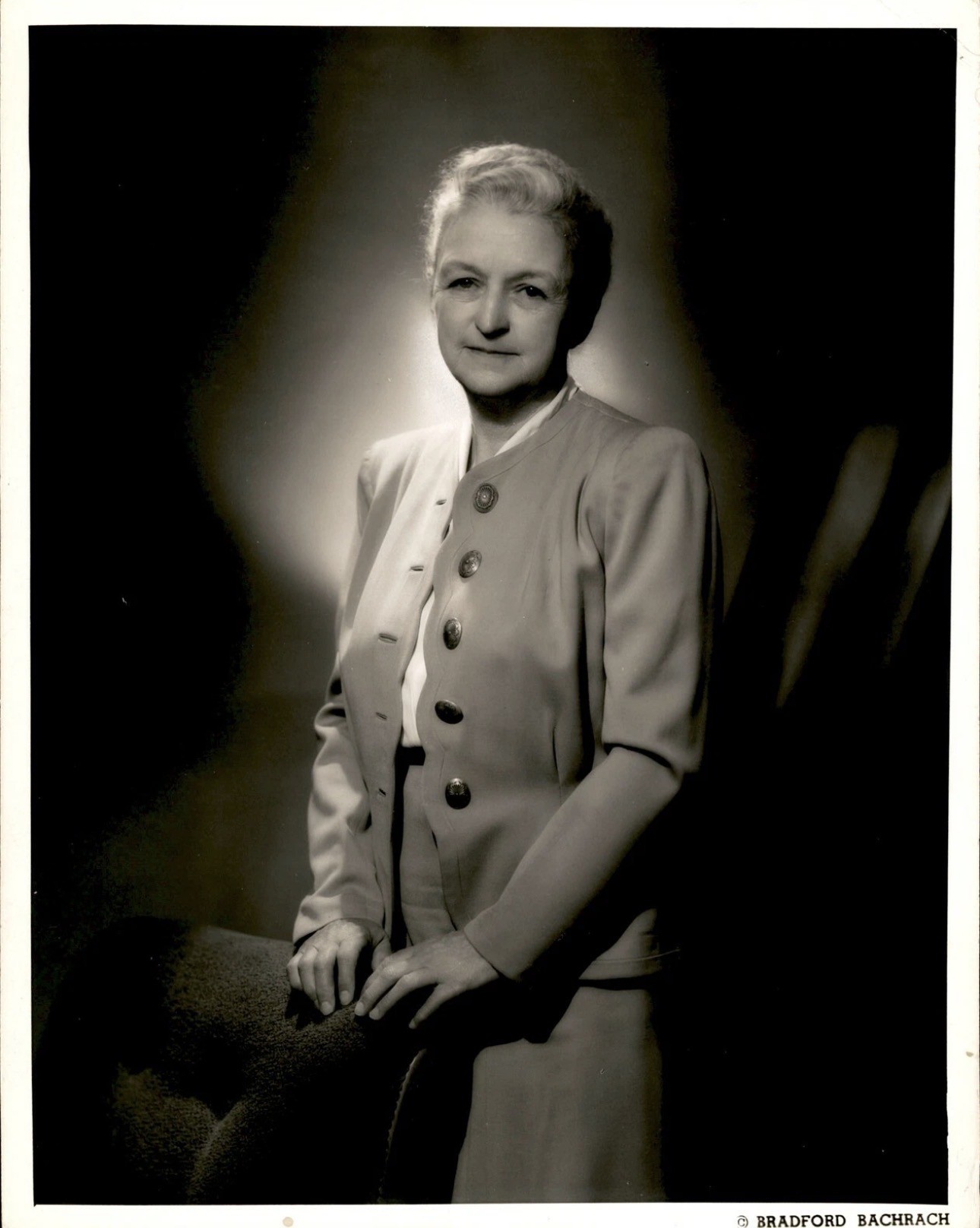
Dr. Myrtle Cheney Murdock was an educator and the spouse of Rep. John Murdock of Arizona. In 1953, after her husband left office, Dr. Murdock joined the Capitol Guide Force. She authored books related to the U.S. Capitol’s artwork. Her book “Constantino Brumidi: Michelangelo of the United States Capitol” became a launching point for research into Brumidi’s life and art.
The book drew new attention to the “Artist of the Capitol” and received many accolades. Like Guide George McCauley before her, Murdock saved Constantino Brumidi from falling — this time into obscurity.
Watch Dr. Murdock give a tour in 1965 in the Brumidi Corridors, which visitors can still experience on the Halls of the Senate specialty tour.