
1900-1926

Women Enter the Guide Force

Following the 1916 election of Jeannette Rankin, the first woman to serve in Congress, and the 1920 ratification of the 19th Amendment to the Constitution, granting women the right to vote, women soon entered the Capitol as employees, including as Capitol Guides. 

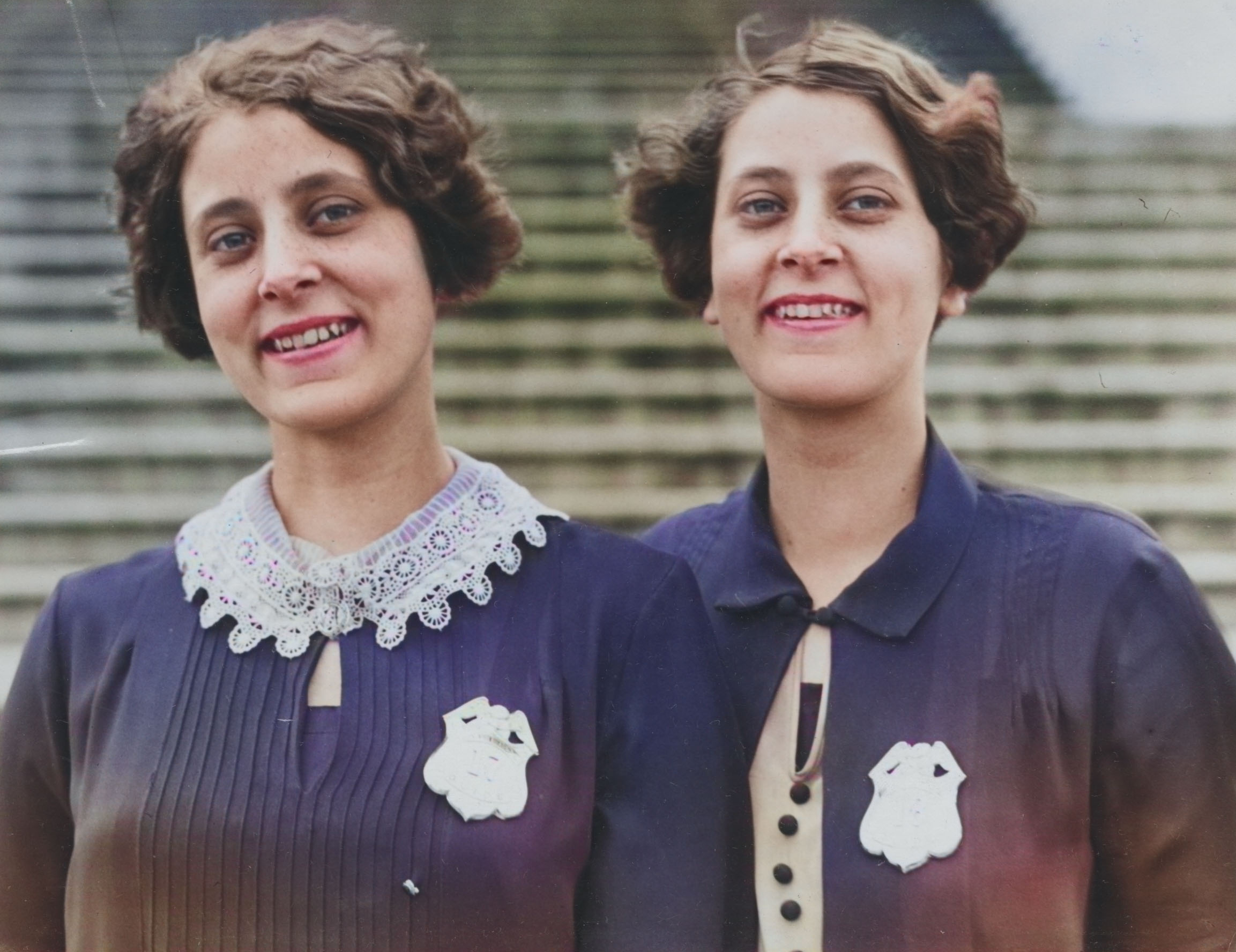
The first woman appointed was Louise Blanche Lingo in 1923. Soon after Lingo’s appointment to the Guide Force, many more women joined her including twins Ann Eliza and Elizabeth Smith of Illinois.

Ann Eliza Smith said of her work, “I was scared at first…but after a year the facts and figures come as a matter of course without any trouble….” 

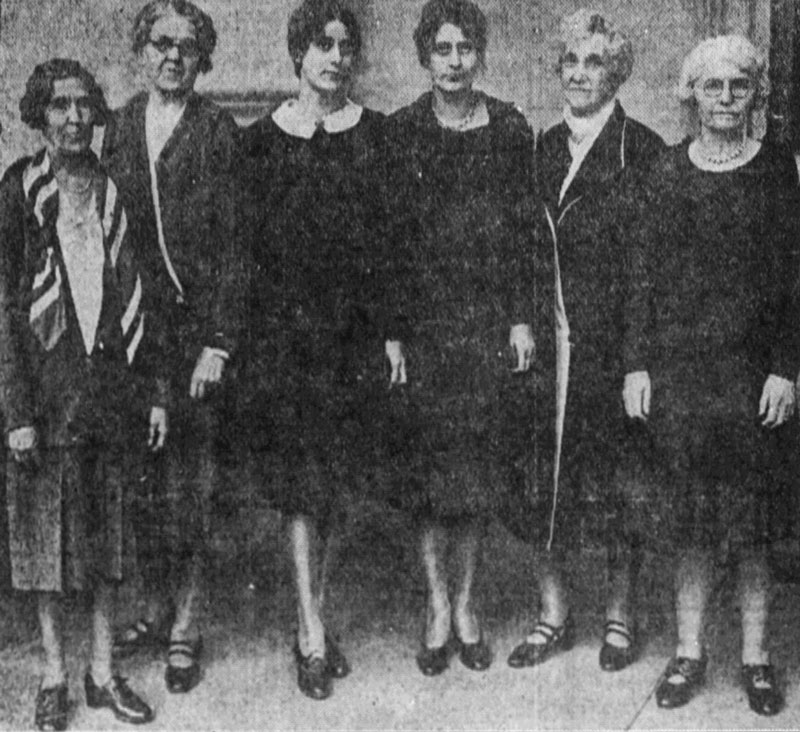
This group photo from 1929 features the first generation of women guides at the Capitol.
A black and white photo of six women wearing dresses
From left to right: Mary Wright, Lenora Jones, Elizabeth Smith, Ann Eliza Smith, L. Blanche Lingo, Mary Woodmansee. The Billings Gazette, Montana, November 22, 1929.
A colorized photo of two identical women smiling.
Twins Elizabeth (left) and Ann Eliza Smith made visitors and colleagues see double when they began careers as Guides in 1927. Collection of the U.S. House of Representatives.
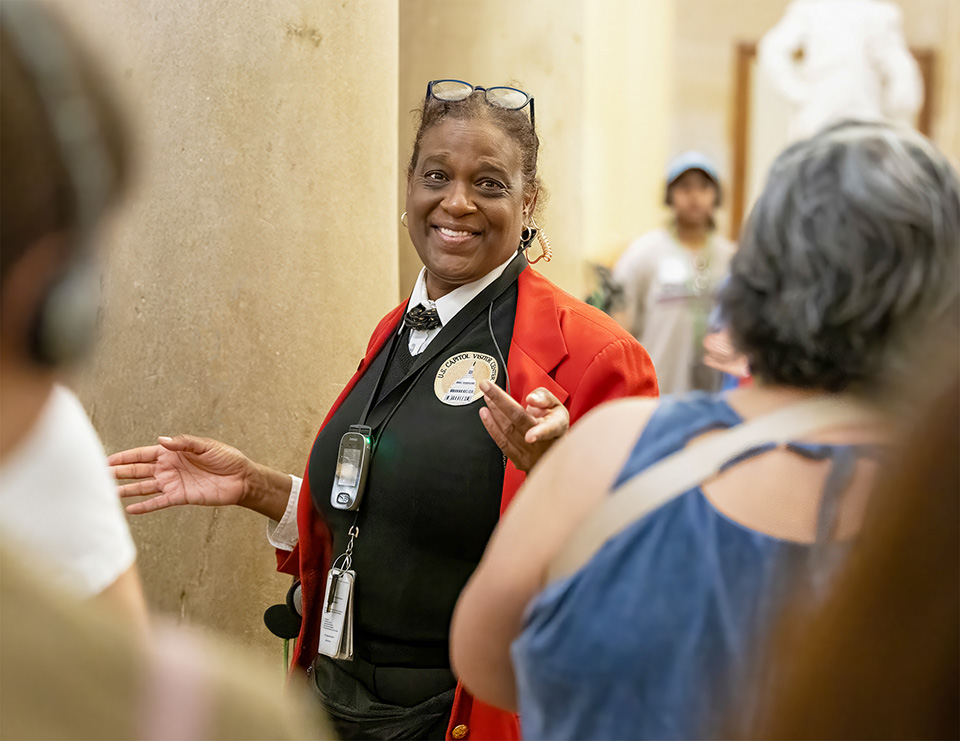
Female guide interacts with visitors.
The legacy of the first women Guides is carried out today by Visitor Guides like Pamela.

A World War 

In 1917 after the United States declared war on Germany, Guides were tasked with a new role watchmen. With their knowledge of the building, Guides were asked to report any suspicious activity to the Capitol Police.

Guides offered free tours to soldiers and sailors, and when the war ended, they walked the corridors, according to newspaper reports, “in command of companies and battalions of sightseers.”
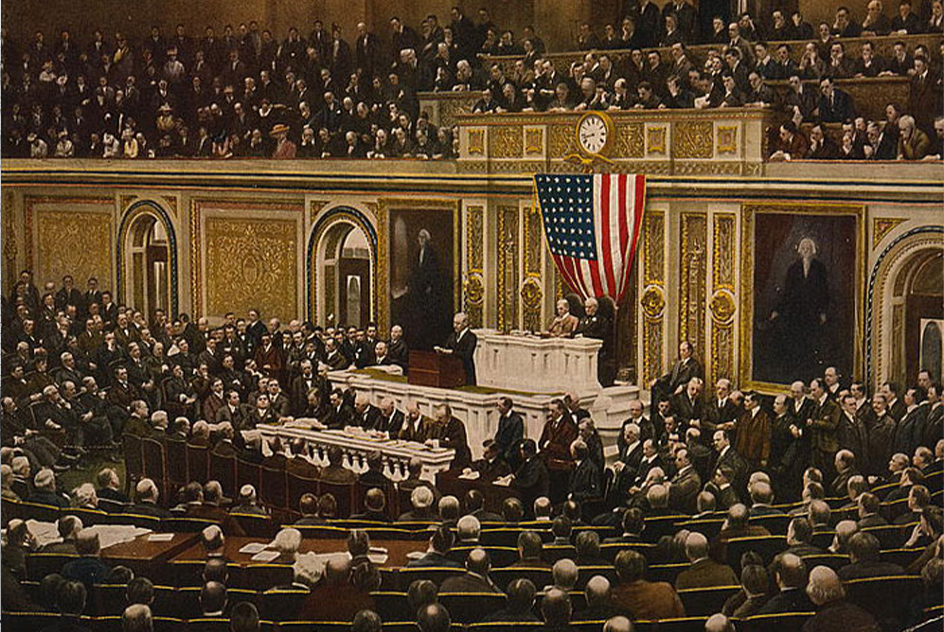
A colorized image of President Wilson addressing Congress.
On April 2, 1917, President Wilson addressed Congress to ask for a declaration of war against Germany, asserting, "The world must be made safe for democracy." Library of Congress.
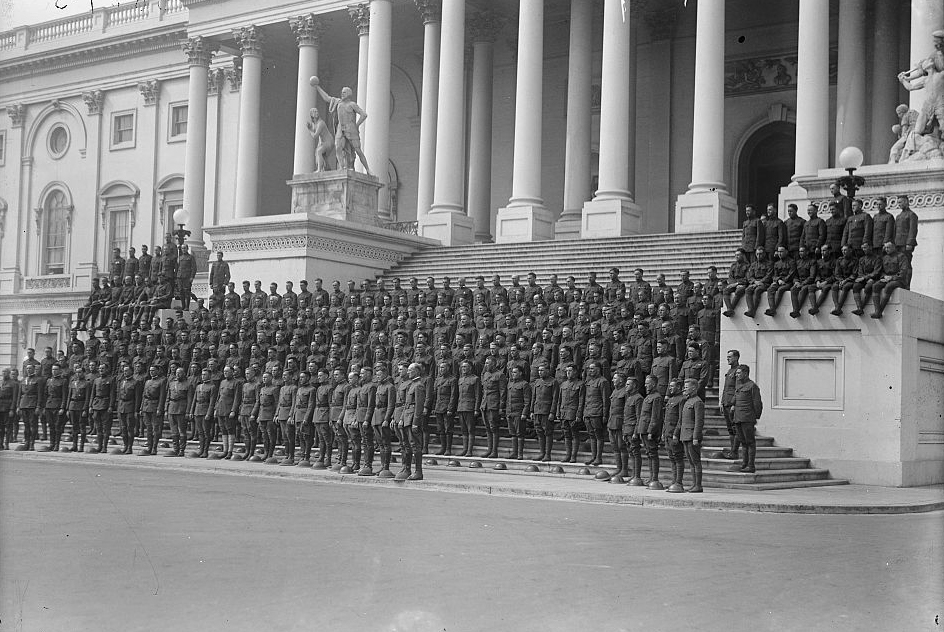
A black and white photo of WWI soldiers standing on the steps of the Capitol.
Military police of the 1st Division stand at the ready on a visit to the Capitol after the Great War, 1919. Library of Congress.
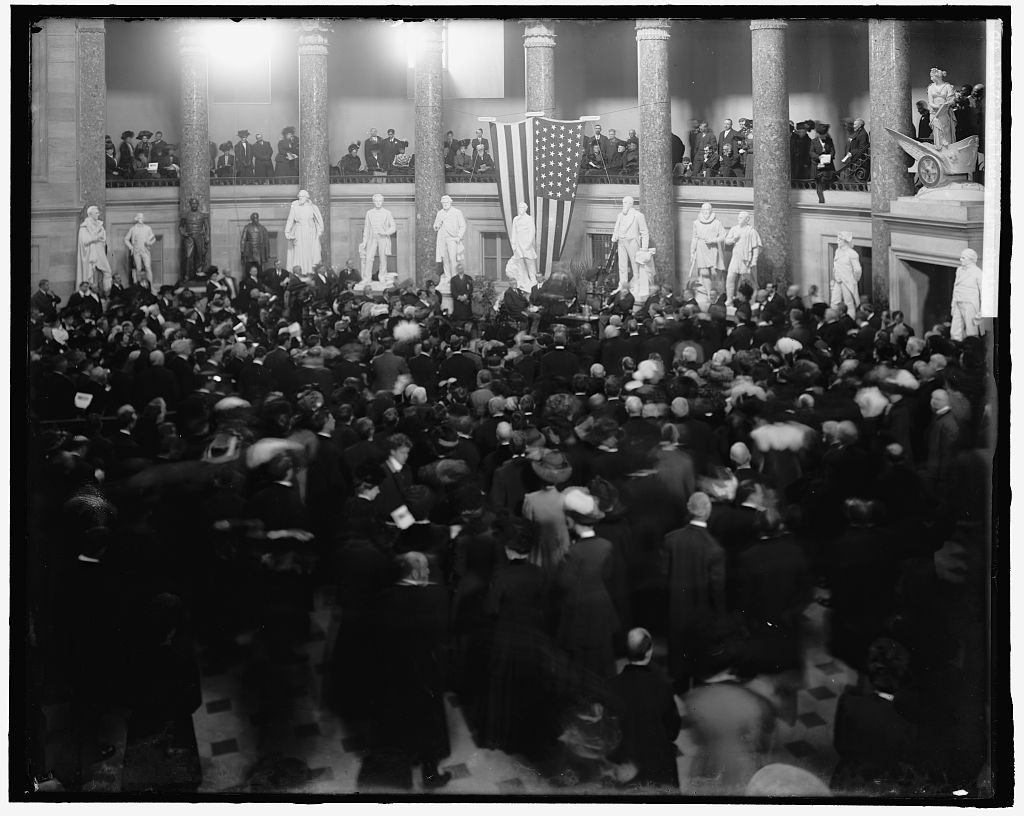
Black and white photograph of a crowd in National Statuary Hall
Hundreds of Hoosiers and invited guests attend the dedication ceremony for Indiana’s statue of Lew Wallace, a soldier, author, and diplomat, in National Statuary Hall, January 11, 1910. Library of Congress.

Commemorating History

With the creation of the National Statuary Hall Collection in 1864, more and more statues began to arrive at the Capitol. Each state can gift two statues of bronze or marble of deceased individuals with significant contributions and connections to the state.

When Indiana presented the statue of Lew Wallace in 1910, the Guide Force was part of the reception committee for the statue’s unveiling ceremony.

When requested, the Capitol Visitor Center continues this tradition and welcomes visitors to statue unveilings.

Current Visitor Guide Maryellen’s favorite memories are of the sculptors sharing with her and her colleagues the process of creating new statues for the collection. Artistic elements incorporated in the statue, inspired by the person’s life and work, help with interpretation.

“Quite often, the artist will come in and speak to us from their perspective of learning who these [figures] are…and so you’re seeing it through the eyes of the artist as well as your own eyes.”
— Maryellen, Visitor Guide

The 2024 unveiling ceremony for the Johnny Cash statue, given by the state of Arkansas, took place in Emancipation Hall. Lower right inset: Maryellen greeting artist Kevin Kresse.

A crowd stands in a large room for the National Anthem. In the lower right corner, a woman and man clasp hands.

Capitol Guide Spotlight

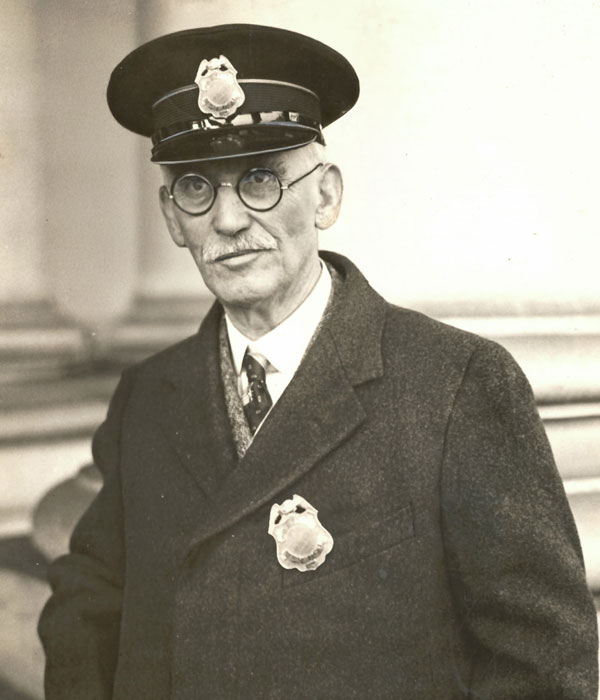
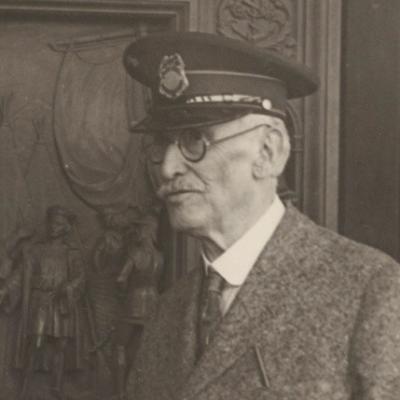
A black and white photo of a man in a jacket and hat.
Benjamin J. Cady. Personal Collection of Jacob Field.

One of the first Guides, Benjamin J. Cady served an impressive 50 years. Born in Maryland, Cady grew up on a family farm. He was appointed a Capitol Guide in 1878. Cady rose to the rank of Chief Guide in 1909, remaining in that role until his death in 1929.

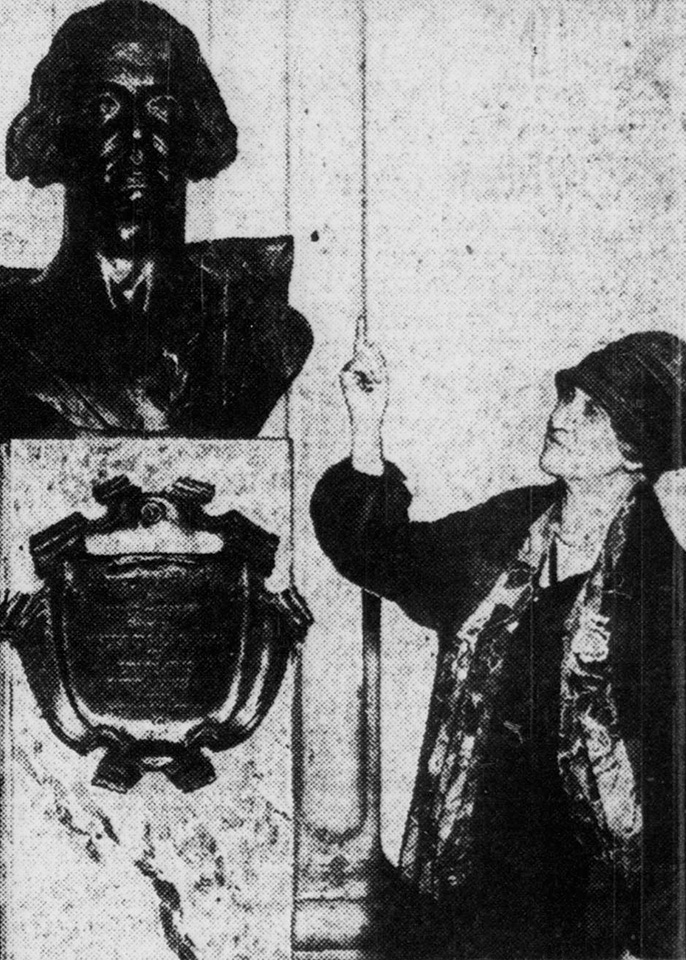
Mrs. L.B. Lingo. The Evening Star, Washington D.C., January 14,1927.
Mrs. L.B. Lingo. The Evening Star, Washington D.C., January 14, 1927.

The first woman appointed as a Guide to the U.S. Capitol Guide Force was Louise Blanche Lingo, who served from 1924 to 1930. Born in Belmont, Ohio. Lingo previously worked for the office of a Senator and as a Telephone Exchange Operator in the Capitol.

“There is always a lot to learn about the job, always something interesting that you can pick up to what you have to tell visitors…I am always finding something new in the work.”

Benjamin Cady, Chief Guide, Atlanta Constitution, Georgia, June 7, 1920
Black and white picture of Benjamin Cady.

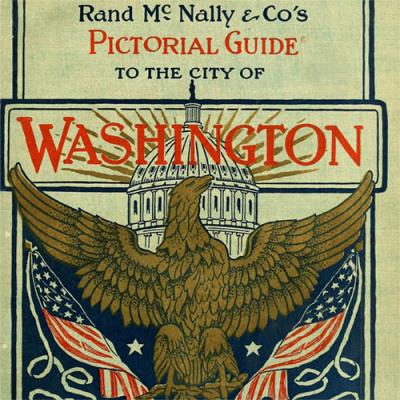
“The Capitol Guides it may be remarked, include some very well informed men, who can make themselves of great use to a stranger in this immense and storied building.”

Rand McNally & Co.’s Pictorial Guide to Washington and Environs…Chicago: Rand McNally, 1901
Book cover with an eagle in front of the Capitol flanked by two American flags and the title Washington

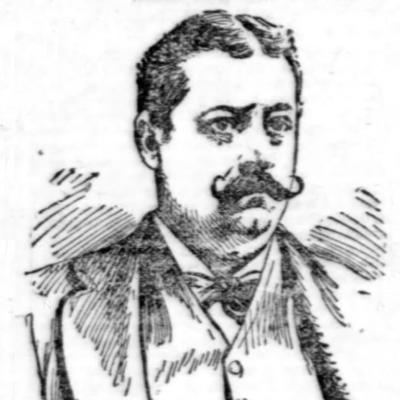
“Every day has its new faces, new questions, and brings out new characteristics of the visitor.”

Howard F. Kennedy, Chief Guide, Times Herald, Washington, D.C. May 19, 1902
black and white drawing of Howard F. Kennedy with dark hair and a mustache

“There is a demand of women guides…There are lots of women who come to the Capitol…and there should be more of the lady guides.”

Joseph G. Rodgers, Sergeant-at-Arms, House of Representatives, The Republican (MA), June 27, 1924
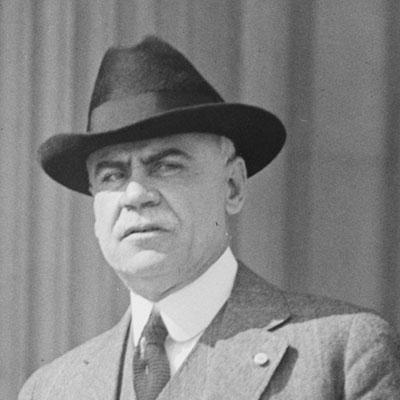
A black and white photo of a man in a hat and suit.

“I’d never think of making a trip around the building without a book under my arm or at least sheets of very copious notes to which to refer. But now…the facts and figures…come without any trouble…”

Ann Smith, Guide, The Flint Journal, Michigan, June 1, 1928
Black and white photo of a woman smiling
Stay in the know
Want the most up-to-date information? Join our mailing list to stay in the know.